From Cherry to Cup: Why America's Coffee Geeks Are Falling for the Bolaven Plateau
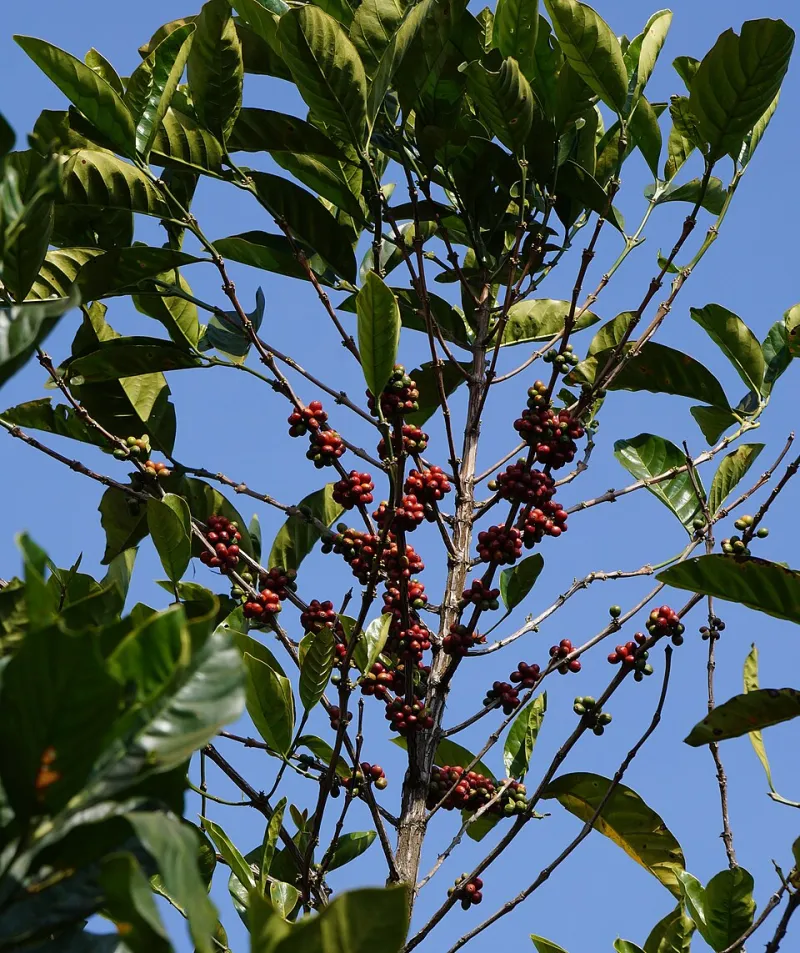
Photo: © Pierre André, CC BY-SA 4.0, via Wikimedia Commons
If you asked most Americans to name a coffee origin, Laos probably wouldn't crack the top ten. Vietnam, sure. Ethiopia, Colombia, Guatemala—easy. But Laos? The country that borders two of the world's coffee powerhouses has quietly been growing some of the most interesting arabica in Southeast Asia, and the epicenter is a cool, misty plateau in the country's far south.
The Bolaven Plateau sits at elevations between 3,000 and 4,500 feet near the city of Pakse, its red volcanic soil fed by dozens of waterfalls and cooled by trade winds. That combination—altitude, mineral-rich earth, and a distinct dry season—turns out to be exactly what specialty-grade arabica wants. American roasters have started noticing. Small-batch shops in Seattle, Denver, and Brooklyn have begun listing Laotian single-origins on their menus, often with tasting notes that surprise even seasoned cuppers: stone fruit, brown sugar, a florality you don't expect from a first-time origin.
A Coffee Culture Older Than You'd Guess
Here's the twist: the French didn't just leave behind baguettes when they exited Indochina. They left coffee. Plantings date back roughly a century, and after decades of upheaval, Lao families rebuilt their farms generation by generation. Today the plateau is home to Laven, Alak, and other ethnic communities whose names literally gave the plateau its own—the Bolaven is named for the Laven people.
What makes a visit here different from, say, a coffee tour in Costa Rica is scale. These aren't corporate estates. They're smallholder plots of a few hectares, often worked by extended families who wash, ferment, and dry their own cherries on raised beds behind the house. When you buy a cup at a farm stand, you're very likely talking to the person who picked it.
Doing the Trail Yourself
The good news for travelers: the Bolaven coffee loop is one of the most accessible self-guided adventures in Laos. Most people base themselves in Pakse, rent a scooter or hire a driver, and spend one to three days circling the plateau.
A few stops worth building a day around:
- Sinouk Coffee – One of Laos's best-known growers, with a plantation and café near Pakxong where you can tour the fields and taste alongside local snacks.
- Villages around Km 35 on Route 20 – Family-run stands selling freshly roasted beans by the bag, often for less than what a single latte costs back home.
- Tad Fane and Tad Yuang waterfalls – The plateau's dramatic drops double as picnic stops between farm visits.
- Cuppings in Pakse – A handful of cafés in town now roast Bolaven beans and will walk you through the same slurp-and-score process used at American cupping tables.
November through February is the sweet spot: dry, cool, and harvest season, so you'll see cherries at their reddest and drying patios at full capacity.
Why the Coffee Alone Justifies the Detour
Most Laos itineraries concentrate on Luang Prabang in the north and the Four Thousand Islands in the south. The Bolaven sits conveniently on the southern route, and travelers who skip it are missing something no temple or river sunset can replicate: a working agricultural landscape where tourism is still a guest, not the main event.
There's also a practical angle for the coffee-obsessed. Laos's arabica industry is young in specialty terms, which means the flavor profiles are still evolving and the supply is genuinely limited. Beans you carry home in your suitcase aren't available on any subscription service. For many visitors, a kilo of Bolaven arabica—bought from the family that grew it—ends up being the most meaningful souvenir of the entire trip.
And when you're back home, brewing a pour-over from beans you watched dry in the sun, that connection holds. The plateau's quiet rhythm—morning mist, the rattle of hand-cranked de-pulpers, kids waving from the fields—travels with the coffee. Southern Laos rewards travelers who go a little out of their way, and this is one detour your taste buds will thank you for.