Plan It Once, Remember It Forever: Laos's Festival Calendar for American Travelers
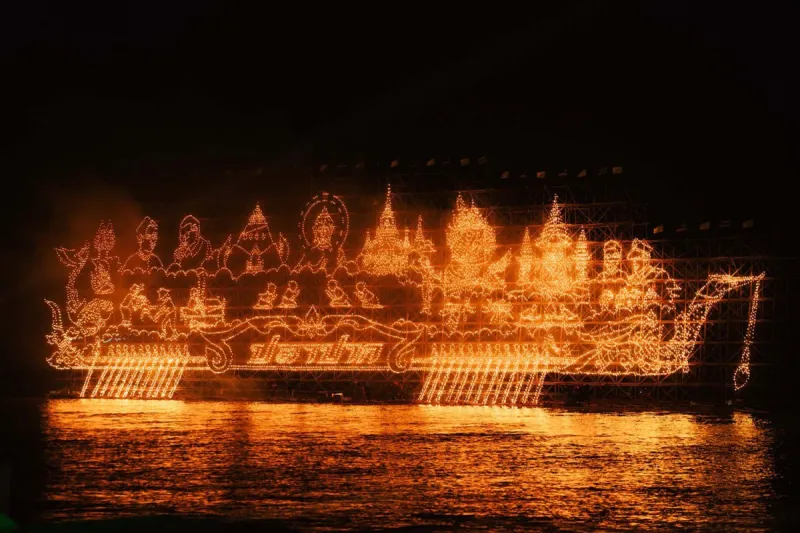
Photo: Lai Hua Fai candlelit boat festival Mekong river Laos night, via static.bangkokpost.com
There's a version of travel where you show up, see the sights, and fly home. And then there's the version where you happen to be standing on a Mekong riverbank at dusk while hundreds of illuminated boats drift past, monks chanting somewhere behind you, and you realize you're not watching a festival—you're inside one.
Laos runs on a lunar calendar, which means its biggest celebrations shift dates every year. That's inconvenient for trip planning and absolutely worth the effort. Here are five festivals that reward the extra scheduling work.
Boun Ok Phansa & the Boat Racing Festival (October/November)
The end of Buddhist Lent, when monks emerge from three months of rainy-season retreat. In Luang Prabang, the finale is the Lai Hua Fai boat festival: elaborately decorated vessels carrying candles and offerings glide down the Mekong at night, releasing the community's accumulated bad luck into the current.
How to experience it well: Ask your guesthouse about temple participation—many welcome respectful visitors who bring small offerings. Watch the boat procession from the riverside with locals rather than from a tour boat. Dress modestly; this is devotion, not spectacle.
Boun Pi Mai — Lao New Year (Mid-April)
Three days of water. Everywhere. What begins as a gentle ritual—scented water poured over Buddha statues and elders' hands for blessing—devolves, joyfully, into a nationwide water fight. In Luang Prabang, the Phra Bang Buddha image is ceremonially bathed and displayed to the public.
How to experience it well: You will get soaked. Accept it with a smile—it's a blessing, not an ambush. Keep your phone in a waterproof pouch, wear clothes that dry fast, and never douse monks, elders, or anyone who signals they'd rather sit this out. Book accommodation months ahead; this is peak domestic travel season.
Boun Bang Fai — The Rocket Festival (May/June)
Held at the start of the rainy season, when farming communities launch enormous homemade rockets skyward to nudge the rain god into action. Villages compete for best launch and best distance. The atmosphere is part county fair, part pyrotechnics, all community pride.
How to experience it well: This is one of Laos's most local celebrations—head to villages around Vang Vieng or in southern provinces. Follow safety distance (rockets are, let's say, artisanal), accept the rice whiskey if offered (or politely decline with a smile), and know that bawdy humor is part of the tradition. Come curious, not judgmental.
That Luang Festival (November, Vientiane)
Centered on the country's most sacred monument, the golden stupa of Pha That Luang, this multi-day gathering draws thousands of pilgrims in traditional dress. The pre-dawn tak bat here is one of the most moving alms ceremonies in the country, followed by candlelight processions around the stupa.
How to experience it well: Arrive before dawn, keep noise to a minimum, and walk clockwise if you join the procession. This is pilgrimage, not photography hour—ask before pointing a lens at anyone praying.
Boun Khao Salak (August/September)
The quieter, lesser-known offering festival, when laypeople make merit by presenting gifts to monks—sometimes with names of deceased relatives attached, linking the living and the dead. It's intimate, unpolished, and a genuine window into daily faith.
How to experience it well: If you're staying at a monastery guesthouse (as some travelers do in Luang Prabang), you may be invited to participate. Bring fruit, rice, or daily necessities rather than money, and let your host guide you through the etiquette.
A Few Ground Rules for Festival Season
- Dress more conservatively than you think you need to: shoulders and knees covered, always, near temples.
- Alcohol flows freely at some celebrations and not at all at others—read the room.
- Ask before photographing rituals, and never pose monks into your shots.
- Flexibility is part of the deal. Lunar calendars and local schedules mean dates shift; treat the uncertainty as part of the adventure.
Time your trip around one of these and you'll come home with something no itinerary can manufacture: the memory of being welcomed into a celebration that was never staged for you in the first place.