Woven Into History: How Laos's Village Weavers Are Keeping Ancient Patterns Alive One Thread at a Time
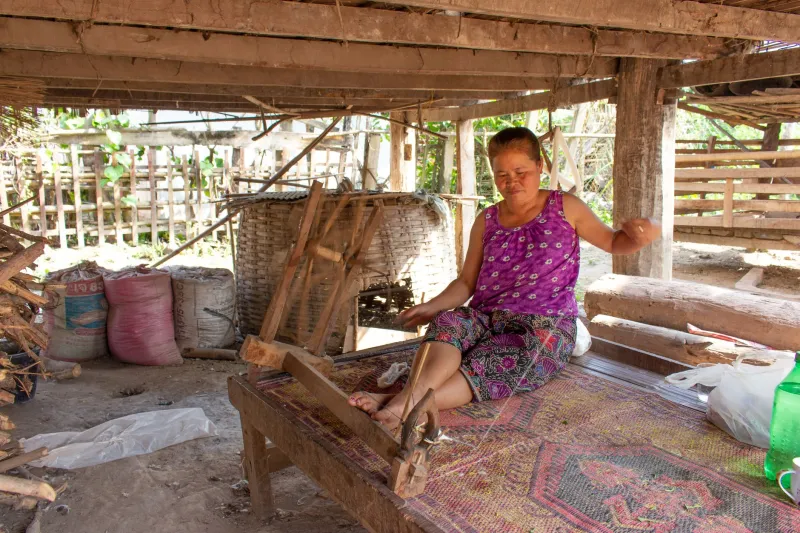
There's a sound you hear before you see anything. A rhythmic, wooden clacking — steady as a heartbeat — drifting out from beneath a stilted wooden house somewhere in the hills of northern Laos. Step closer and you'll find a woman seated at a floor loom that looks older than anything you'd find in a museum back home, her hands moving with a kind of quiet confidence that only comes from doing something your whole life. And her mother's whole life. And her grandmother's before that.
Textile weaving in Laos isn't a craft. It's closer to a language — one spoken in silk and cotton, in indigo and crimson, in patterns that have been passed down without ever being written down. For travelers willing to slow down and pay attention, the weaving villages scattered across Luang Prabang province and the surrounding highlands offer one of the most genuinely moving cultural encounters in all of Southeast Asia.
Why Lao Textiles Are Different From Anything You've Seen Before
If you've browsed the fabric stalls at a night market and thought, "okay, colorful cloth," you've only seen the surface. Traditional Lao weaving — particularly the sinh (the cylindrical skirt worn by Lao women) and ceremonial pha biang shawls — is dense with meaning. The geometric diamonds, stylized nagas (serpent spirits), elephants, and lotus motifs aren't decorative choices. They're symbolic vocabulary.
Different ethnic groups across Laos — the Tai Lue, Tai Dam, Hmong, and Phuan, among others — each maintain their own distinct visual traditions. A Tai Lue weaver in Ban Xang Khong, one of the most accessible weaving villages near Luang Prabang, will produce cloth that looks nothing like what a Hmong artisan in the highlands creates. The differences in technique, dye source, and pattern aren't just aesthetic — they signal community identity, spiritual beliefs, and social status.
Nong Kiau-based weaver Bounma, who learned the craft from her mother at age eight, puts it plainly: "When I weave a pattern, I'm not inventing something. I'm remembering something. Every family has its own memory in the cloth."
Getting There: The Villages Worth Visiting
The easiest entry point for most American travelers is Ban Xang Khong, a village about three miles east of Luang Prabang's old town along the Mekong. It's walkable or a quick tuk-tuk ride, and many households here have working looms visible right from the street. You can watch the process up close — warping, dyeing, weaving — without it feeling staged or touristy. The weavers here are genuinely at work, and most are happy to explain what they're making if you take a moment to ask respectfully.
For something more immersive, Ban Phanom, a few miles further out, is known for its Tai Phuan weavers who specialize in intricate gold and silver thread work used in ceremonial textiles. It's quieter, less visited, and gives you a real sense of how weaving fits into daily village life — not as a tourist attraction, but as something that happens alongside cooking, childcare, and everything else.
If you're making it up to Luang Namtha in the far north, the Boat Landing Guesthouse has long supported responsible textile tourism and can connect you with Tai Lue weaving communities in the surrounding villages. This region produces some of the most technically complex cloth in the country.
Reading the Patterns: A Beginner's Guide to What You're Looking At
You don't need to be a textile scholar to start appreciating the symbolism. A few things to look for:
- Naga motifs (the serpentine figures that appear frequently on sinh borders) represent water, fertility, and protection. They're also deeply tied to Buddhist cosmology — the naga is said to have sheltered the Buddha during meditation.
- Diamond patterns are common across multiple ethnic groups and often represent the universe or a protective force field around the wearer.
- Elephant imagery shows up in ceremonial textiles and signals strength, royalty, and good fortune.
- Indigo-dyed backgrounds are traditional among several highland groups and require a labor-intensive natural dyeing process that can take weeks.
Asking a weaver about her specific patterns — even through a guide or translator — is one of those conversations that tends to open up into something much larger than you expected. These women are not just craftspeople. They're historians.
Shopping With Intention: How to Buy Without Exploiting
Here's the honest truth: a lot of the "Lao textiles" sold at tourist shops in Vientiane and even Luang Prabang are machine-made in China or Thailand. They look similar enough to fool a first-time visitor, but they put nothing back into the communities that actually developed these traditions.
If you want your purchase to mean something, buy directly from weaving villages or from organizations with verified fair-trade practices. A few worth knowing:
- Ock Pop Tok in Luang Prabang is a well-established social enterprise that works directly with local weavers, offers studio visits and weaving workshops, and is transparent about its sourcing. Their prices reflect the actual labor involved — and that's a feature, not a bug.
- T'Shop Lai Gallery, also in Luang Prabang, focuses on authentic, ethnically specific textiles and provides context for what you're buying.
- At village markets, look for signs of hand-weaving: slight irregularities in pattern, natural dye variation, and the presence of actual looms on the premises.
And don't be afraid to ask questions. Where was this made? Who made it? What does this pattern mean? Legitimate sellers — especially those selling genuine handmade work — will welcome the curiosity.
Taking a Class: More Than a Souvenir
If your schedule allows even half a day, consider a weaving workshop rather than just a shopping trip. Ock Pop Tok runs hands-on sessions where you sit at a loom, attempt a basic pattern under guidance, and leave with a small piece you actually made. It sounds touristy, and maybe it is a little — but it also gives you a physical understanding of how much skill and time goes into even a few inches of cloth. That changes how you see everything else you encounter afterward.
Some village homestay programs in Luang Namtha and Phongsali provinces include weaving demonstrations as part of a longer cultural immersion experience. These are worth seeking out if you want something beyond the day-trip version.
Why This Matters Beyond the Beautiful Fabric
Lao weaving traditions are under real pressure. Younger generations in many communities are drawn toward urban jobs and faster income. Synthetic dyes are replacing the laborious natural dyeing process. Machine-made imitations flood markets at prices handmade cloth simply can't compete with.
When travelers engage thoughtfully — visiting villages, taking workshops, buying directly from artisans at fair prices — they're participating in something that actually helps keep these traditions viable. Not in a charity way. In an economic way that respects the skill and knowledge involved.
The women at those looms aren't performing for tourists. They're doing what they've always done. The question is whether the world they're weaving for still has room for what they know.
Come find out.