Why Laos Is the Antidote to Overtourism—and Americans Are Finally Catching On
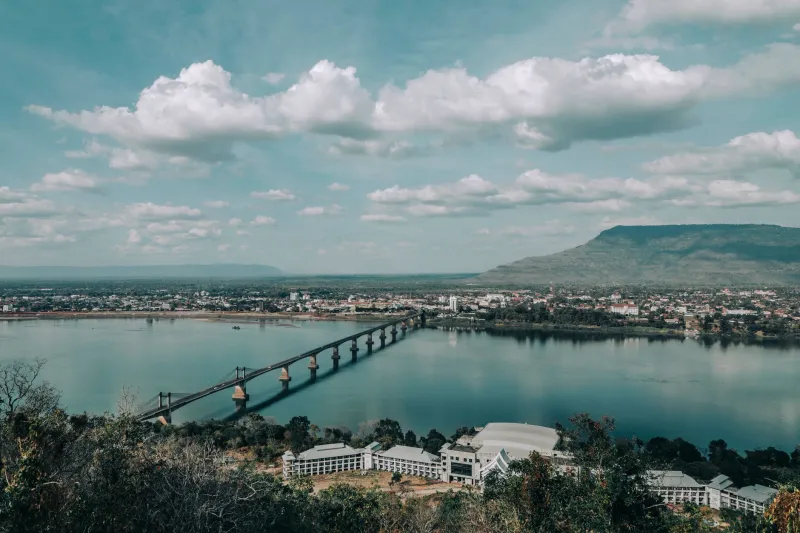
Let's be honest: Southeast Asia has a tourism problem. Not the kind where you run out of things to do—the opposite, actually. Bangkok's Grand Palace now manages crowds the way Disney manages lines. Chiang Mai's Sunday Night Market has become a gauntlet of selfie sticks and souvenir knockoffs. And don't even get started on Koh Samui in peak season. For a certain breed of American traveler—the kind who does their homework, values authenticity, and breaks into a cold sweat at the phrase "Instagram-famous destination"—these places have started to feel like theme parks dressed up as culture.
So where are those travelers going instead? Increasingly, the answer is Laos.
The Numbers Don't Lie (But They Might Surprise You)
For years, Laos flew so far under the radar that most Americans couldn't confidently place it on a map. That's shifting. Google Trends data shows a steady uptick in searches for "Laos travel" among US users since 2022, and travel agencies that specialize in Southeast Asia report a noticeable pivot in client requests. "We used to get people asking for two nights in Luang Prabang tacked onto a Thailand trip," says one independent travel consultant who works with clients planning immersive Asian itineraries. "Now people are asking to build the whole trip around Laos."
The reasons aren't hard to understand once you've been there. Laos received roughly 4.2 million international visitors in pre-pandemic 2019—compare that to Thailand's nearly 40 million that same year. Even accounting for population differences, Laos simply hasn't been subjected to the kind of mass tourism infrastructure that can hollow out a destination's soul. There are no all-inclusive beach resorts engineered to keep you from ever leaving the property. There are no party streets designed to extract your wallet while simulating local culture. What there is, instead, is the actual place.
What Slow Travel Actually Means—and Why Laos Is Built for It
The phrase "slow travel" gets thrown around a lot, but in Laos it isn't a philosophy you have to consciously adopt. It's just the way things work.
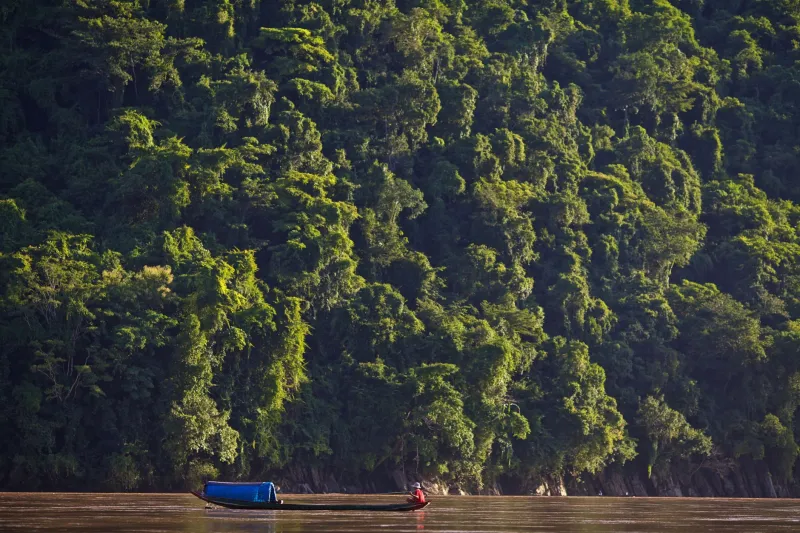
The country's infrastructure, while improving, doesn't reward rushing. Roads wind through mountain terrain that demands patience. Boat journeys down the Mekong move at the river's pace, not yours. Even the Wi-Fi in most guesthouses seems to understand that you've come here to disconnect. For Americans conditioned to optimize every hour of a vacation—checking off sights like items on a grocery list—this can feel disorienting at first. Then, usually somewhere around day three, it starts to feel like relief.
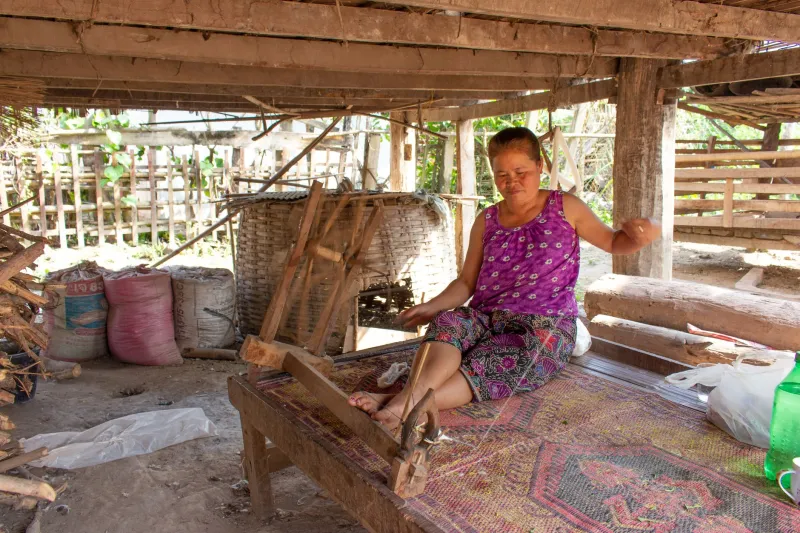
Slow travel, at its core, is about exchange rather than consumption. It's the difference between photographing a monk during the alms-giving ceremony at dawn and actually learning what that ritual means to the community that's practiced it for generations. It's the difference between eating at a restaurant that serves "authentic Lao food" for tourists and sitting down at a family's roadside kitchen where the menu is whatever came out of the garden that morning.
Laos rewards the traveler who lingers.
Voices from the Road: What Repeat Visitors Say
Talk to Americans who've been to Laos more than once—and there are more of them than you'd think—and a pattern emerges in what they describe.
"I went to Thailand three times and always left feeling like I'd seen the highlights," says Marcus, a 38-year-old graphic designer from Portland who spent three weeks in Laos last year. "In Laos, I left feeling like I'd barely scratched the surface, but in a good way. Like there was more waiting for me whenever I came back."
That sense of depth is something Laos seems to generate almost effortlessly. Part of it is geographic—the country's mountainous interior and the ethnic diversity of its 49 officially recognized groups mean that a week in Luang Prabang and a week in the Bolaven Plateau might as well be two different countries. Part of it is cultural. The Lao concept of sabai dee—a greeting that roughly translates to "are you comfortable? Are you at ease?"—reflects a broader national value around unhurried contentment that seeps into every interaction.
"People weren't performing friendliness," says Jenna, a nurse from Austin who traveled solo through Laos for two weeks. "They were just... genuinely kind. It caught me off guard every time."
Practical Ways to Embrace the Pace
If you're ready to trade the highlight reel for something more textured, here's how to actually do it in Laos.
Extend your stay in one place. The temptation to hop between Vientiane, Luang Prabang, Vang Vieng, and the 4,000 Islands in ten days is real, but resist it. Pick two destinations and go deep. Rent a bicycle. Walk streets you have no reason to walk. Eat at the same noodle stall three mornings in a row until the owner starts saving you a seat.
Say yes to the slow boat. The two-day Mekong slow boat journey from the Thai border to Luang Prabang is, for many travelers, the trip's defining experience. It's not the fastest way to get anywhere. That's entirely the point.
Skip the tour group for the cooking class. Plenty of local families and small guesthouses offer informal cooking experiences that aren't listed on any booking platform. Ask your guesthouse owner. Ask at the morning market. These unscripted encounters are where the real cultural exchange happens.
Build in buffer days. American vacation culture tends toward maximalism—if you have two weeks, you fill two weeks. In Laos, leave gaps. An unexpected festival, a conversation that turns into a day trip, a rainstorm that forces you into a teahouse for three hours—these unplanned moments are often what people remember most.
The Transformation Nobody Warns You About
Here's the thing about Laos that travel blogs don't always capture: it has a way of recalibrating you. Not in a cheesy, eat-pray-love kind of way. More quietly than that.
You start noticing things you'd normally scroll past. The geometry of a temple's roofline against a mountain ridge. The sound of a village waking up before dawn. The particular way afternoon light hits the Mekong when the river is low and the sandbars are exposed. You stop measuring the day by what you accomplished and start measuring it by what you actually experienced.
That's what the travelers who are trading Thailand for Laos are discovering. Not just a new destination, but a different relationship with travel itself—one where the journey stops being something you document and starts being something you actually inhabit.
Laos isn't for everyone. If you need a beach club, a Michelin-starred restaurant, or a rooftop bar with a curated cocktail menu, you'll find those things more easily elsewhere. But if you're after something that feels genuinely real—unhurried, layered, and quietly extraordinary—this small, landlocked country in the heart of Southeast Asia might be exactly what you didn't know you were looking for.