Leaving the Grind Behind: What American Expats Are Discovering About Life in Laos

There's a word in Lao that doesn't translate cleanly into English: bor pen nyang. Roughly, it means "never mind" or "it doesn't matter" — but locals will tell you it's less a phrase and more a philosophy. It's the gentle shrug of a culture that has decided, collectively, not to let the small stuff win. For a growing number of Americans who've packed up their apartments and relocated to Laos, that philosophy has become something close to a revelation.
The numbers are still modest compared to Thailand or Vietnam, but the expat community in Laos is quietly expanding. Digital nomads, retirees, teachers, and remote workers are landing in Luang Prabang, Vientiane, and smaller towns like Vang Vieng and Thakhek — and many of them are staying far longer than they planned.
More Than Just Cheap Rent
Ask any American expat why they moved to Laos and the cost of living will come up within the first thirty seconds. A comfortable one-bedroom apartment in Vientiane can run between $300 and $500 a month. A sit-down meal at a local restaurant? Often under $3. For someone carrying student debt or burned out from a high-cost city like San Francisco or New York, the financial breathing room alone feels like oxygen.
But spend more than five minutes with anyone who's actually made the move, and you'll quickly realize the money is almost beside the point.
"I came for the affordability," says Marcus, a 34-year-old UX designer from Portland who relocated to Luang Prabang three years ago. "I stayed because I stopped being anxious all the time. I genuinely don't know how to explain that to people back home without sounding like I joined a cult."
What Marcus is describing isn't unique to him. It's a pattern that keeps surfacing in conversations with long-term American residents across the country: a kind of decompression that happens slowly, almost without their noticing, until one day they realize they haven't checked their email at midnight in six months.
The Rhythm of a Different Kind of Day
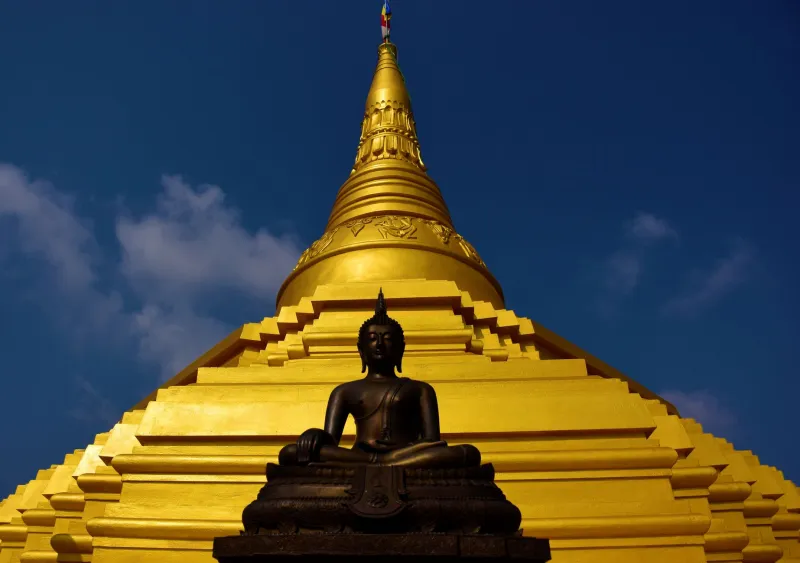
Laotian daily life operates on a tempo that feels almost deliberately at odds with the American default setting. Mornings begin gently — monks in saffron robes padding through mist-covered streets during the alms-giving ceremony known as tak bat, markets filling with the smell of lemongrass and grilled meat, neighbors stopping to chat without any apparent urgency to be somewhere else.
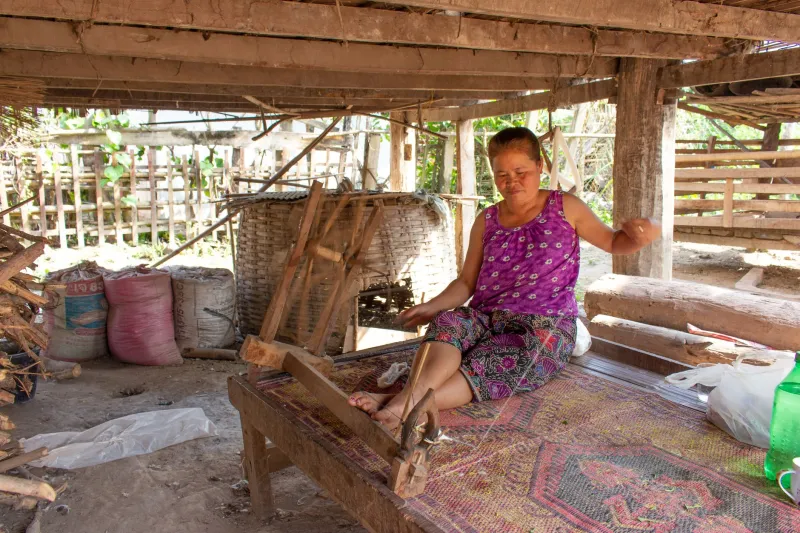
Work happens, of course. Laos is not a country frozen in time. But the cultural expectation that productivity should define your identity simply doesn't have the same grip here. Lunch breaks stretch. Afternoons slow. Evenings are for family, for sitting by the Mekong, for sharing food with whoever happens to show up.
"Back in Chicago, I used to feel guilty if I wasn't doing something productive every waking hour," says Jennifer, a 41-year-old former marketing director who now runs a small guesthouse near the Nam Khan River. "Here, people genuinely don't understand that guilt. They think it's strange — almost sad. And honestly, after a while, I started to think they were right."
That cultural resistance to hustle isn't laziness. It's a deeply rooted value system shaped by Buddhism, by close-knit family structures, and by centuries of living in relationship with the natural world. Laotians tend to measure a good day not by what was accomplished, but by the quality of time spent with people they care about.
Community as a Counter-Culture
One of the things that surprises Americans most about life in Laos is how quickly they get folded into the social fabric. Neighbors bring food. Festival invitations arrive before you've even figured out where the nearest grocery store is. The concept of eating alone — a near-daily reality for millions of Americans — is genuinely foreign to most Laotians.
For expats who moved abroad partly to escape a sense of urban isolation, this communal warmth can feel almost disorienting at first.
"I'd lived in my apartment building in Austin for two years and didn't know a single neighbor's name," says David, a 52-year-old retired teacher now based in Vang Vieng. "Within a week of arriving here, I'd been invited to three family dinners. I cried on the way home from the first one. I didn't even fully understand why."
That sense of belonging extends into the expat community itself, which tends to be small enough that genuine friendships form quickly. There's no keeping up with the Joneses in a place where most people arrived specifically to stop doing that.
Rethinking What Success Looks Like
Perhaps the most profound shift that long-term expats describe is a fundamental rewiring of their relationship to ambition. Not an abandonment of goals or drive, but a quieter, more intentional version of it — one that asks why before it asks how much.
Marcus, the UX designer, still works full-time for a US-based client. But his relationship to that work has changed. "I do better work now, honestly. Because I'm not running on fumes and cortisol. I take a real lunch break. I go for a walk by the river. I come back and I actually have ideas."
Jennifer says she earns a fraction of what she made in marketing, but describes herself as wealthier in every way that matters to her now. "I know that sounds like something on a motivational poster. But I own a business, I know my neighbors, I watch the sunrise most mornings, and I'm not on antidepressants for the first time in a decade. You do the math."
What They're Bringing Back — Even If They Never Leave
For Americans still stateside who are curious about the Laos expat life, the most transferable lesson might not require a plane ticket. The values these expats are absorbing — presence over productivity, community over competition, enough over more — are available anywhere, if you're willing to look for them.
But there's something about being immersed in a culture that lives those values daily, where they're baked into the architecture of the day, that makes them stick in a way that a weekend wellness retreat simply can't replicate.
Laos has a way of quietly dismantling the stories Americans carry about what a life is supposed to look like. And for the people who've let it do that work, there's rarely any desire to pick those stories back up.
Bor pen nyang. It doesn't matter. And somehow, that makes everything matter more.