Roots and Remedies: Why American Health Seekers Are Trading Yoga Mats for Village Healers in Laos
There's a moment, somewhere between your third cup of bitter herbal tea and a monk pressing warm medicinal compresses into your shoulders, when you realize that wellness tourism doesn't have to mean a sleek infinity pool and a curated playlist. In Laos, it can mean sitting cross-legged on a bamboo mat while a 70-year-old healer reads the tension in your body like a map she's studied her whole life.
For a certain kind of American traveler—the one who's already done Bali, already tried Ayurveda in Kerala, already signed up for the breathwork retreat in Costa Rica—Laos is starting to feel like the missing piece. Not because it's trendier or more Instagrammable, but because it's more real. The healing traditions here haven't been packaged for export. They've just been quietly practiced, generation after generation, in villages most tourists never reach.
What Traditional Lao Medicine Actually Looks Like
Lao traditional medicine, known locally as mor boran (literally "ancient doctor"), is a layered system that draws from at least three distinct streams of knowledge: Buddhist healing philosophy, animist spirit practices inherited from indigenous communities, and herbal traditions that overlap with—but remain distinct from—Chinese and Ayurvedic systems.
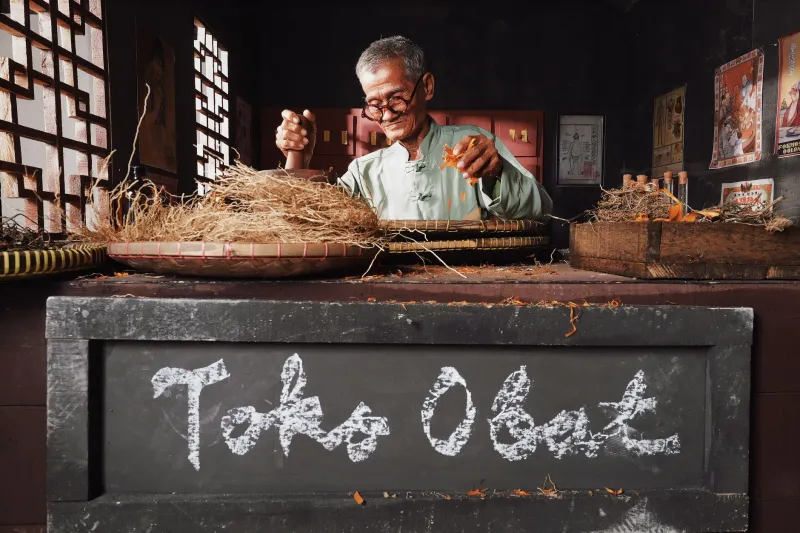
Herbal remedies form the backbone of everyday treatment. Practitioners use hundreds of plant species, many of them foraged from surrounding forests, to address everything from digestive issues to chronic fatigue to what Westerners might call anxiety. Unlike the standardized supplement bottles you'd find at a Whole Foods, these remedies are typically prepared fresh, often tailored to the individual patient based on a consultation that can feel more like a conversation about your life than a clinical intake form.
Then there's nuat boran, a traditional massage technique that shares some DNA with Thai massage but carries its own regional character—slower in some ways, more focused on energy pathways that Lao healers call sen lines. Village practitioners often combine bodywork with herbal steam treatments, using bundles of lemongrass, kaffir lime leaves, and galangal heated over coals and pressed gently against the skin.
And then there are the spiritual dimensions, which tend to catch Western visitors off guard. The baci ceremony—a ritual blessing involving white cotton strings tied around the wrists to call wandering spirits back to the body—is often incorporated into healing practices, particularly for illnesses that local healers interpret as having emotional or spiritual origins. For Americans raised on the clean separation of physical and mental health, this holistic view can be genuinely disorienting. And then, gradually, it starts to make a different kind of sense.
Beyond the Wellness Resort: Finding the Real Thing
Luang Prabang has a handful of spas that gesture toward traditional Lao healing—and some of them are genuinely good. But the travelers who come away most transformed tend to be the ones who push further. Smaller towns like Vang Vieng (outside its more chaotic party-tourism orbit), Muang Sing in the far north, and villages along the Nam Ou River are where you're more likely to encounter healers practicing in an unmediated way.
Some visitors connect with these practitioners through local guesthouses or community-based tourism organizations that have established relationships with village healers willing to receive outside guests. These aren't formal clinics. You might sit in someone's home, surrounded by drying herbs hanging from the rafters and children wandering in and out. The consultation might happen partly in Lao, partly through a translator, partly through gesture and touch.
What Americans often describe afterward is a feeling of being seen in a way that Western medical appointments rarely provide. The time taken. The attention to the whole person. The absence of a ticking clock.
The Buddhist Thread Running Through Everything
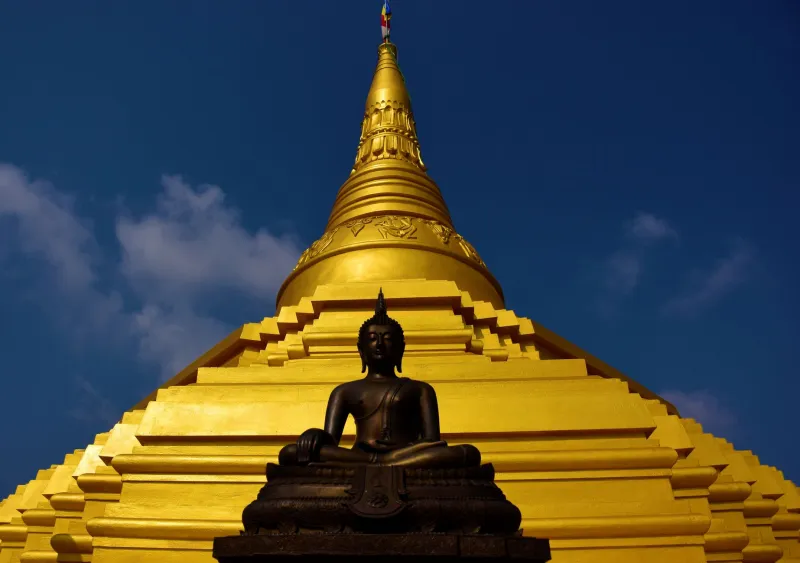
It's impossible to fully understand Lao healing traditions without understanding their relationship to Theravada Buddhism, which has shaped Lao culture for centuries. Many of the country's most respected traditional healers are monks or former monks, and the monasteries have historically served as centers of medical knowledge, housing manuscripts that catalogued herbal treatments and healing rituals.
At Wat Sop Sickharam in Luang Prabang, for instance, monks have offered traditional herbal treatments to local community members for years—a living example of the temple as community health resource. For American visitors, sitting with a monk healer reframes the entire experience. This isn't alternative medicine as a lifestyle brand. It's a form of care that has never been separated from spiritual practice, community, and an understanding of the human being as something more than a collection of symptoms.
Some travelers who come to Laos primarily for sightseeing find themselves unexpectedly drawn into this dimension of the culture. A conversation with a monk about the nature of suffering—in the Buddhist sense—turns out to have more practical resonance than they expected. The line between travel and healing blurs in a way that's hard to articulate once you're back home.
What Responsible Healing Tourism Actually Requires
It's worth being honest about the tensions here. There's a long, uncomfortable history of Western travelers extracting knowledge from indigenous and traditional cultures without reciprocity—treating sacred practices as exotic experiences to consume and then leave behind. Healing tourism in Laos is not immune to these dynamics.
Responsible engagement means paying fairly, following the lead of local guides and translators, not photographing ceremonies without explicit permission, and resisting the urge to reduce complex spiritual practices to content for your social media feed. It also means being honest with yourself about your intentions. Are you genuinely curious and open to learning on the culture's own terms? Or are you looking for a more authentic-sounding backdrop for the same wellness experience you could have had in Scottsdale?
The travelers who seem to get the most from these encounters are the ones who arrive with genuine humility—willing to be confused, willing to sit with practices that don't map neatly onto their existing frameworks, willing to let the experience be what it is rather than what they imagined it would be.
A Different Kind of Itinerary
If you're considering building a trip around traditional healing in Laos, a few practical notes. Give yourself time—at least two to three weeks if you want to move beyond surface-level encounters. Learn a few words of Lao; even the attempt communicates respect. Consider connecting with community-based tourism organizations like the Luang Namtha-based Nam Ha Ecotourism Project, which works with local communities in ways that keep economic benefits local.
And maybe most importantly: let go of the idea that you're going to "learn" Lao traditional medicine in any meaningful sense during a short trip. What you can do is witness, experience, and carry home a different sense of what healing might mean—one that's older, quieter, and considerably less concerned with your personal brand than most wellness content you've encountered.
That, it turns out, might be the most therapeutic thing of all.